Choose team building when the immediate priority is connection and a shared experience. Choose team development when people need to change how they coordinate, communicate or make decisions. A programme can combine both, provided the activities and follow-through serve the agreed outcome.
Ask what the client wants to be different
A request for a team-building event may arise after a restructure, a busy year or repeated handover problems. Those are different situations. Ask for two or three examples of the moments the client wants to improve.
If people have not met, structured introductions may be useful. If tasks regularly stall between departments, the programme needs a way to explore dependencies and agree working practices. Enjoyment alone does not resolve an unclear process.
Compare the intended outputs
| Question | Team building emphasis | Team development emphasis |
|---|---|---|
| Why gather? | Build connection and familiarity. | Improve a specific way of working. |
| What do people practise? | Participation and shared challenges. | Behaviours such as checking instructions, feedback and coordination. |
| What remains afterwards? | Shared experience and new connections. | Working agreements, owners and review dates. |
| What can be checked? | Participation and experience feedback. | Learning demonstrations and later work examples. |
Make the simulation earn its place
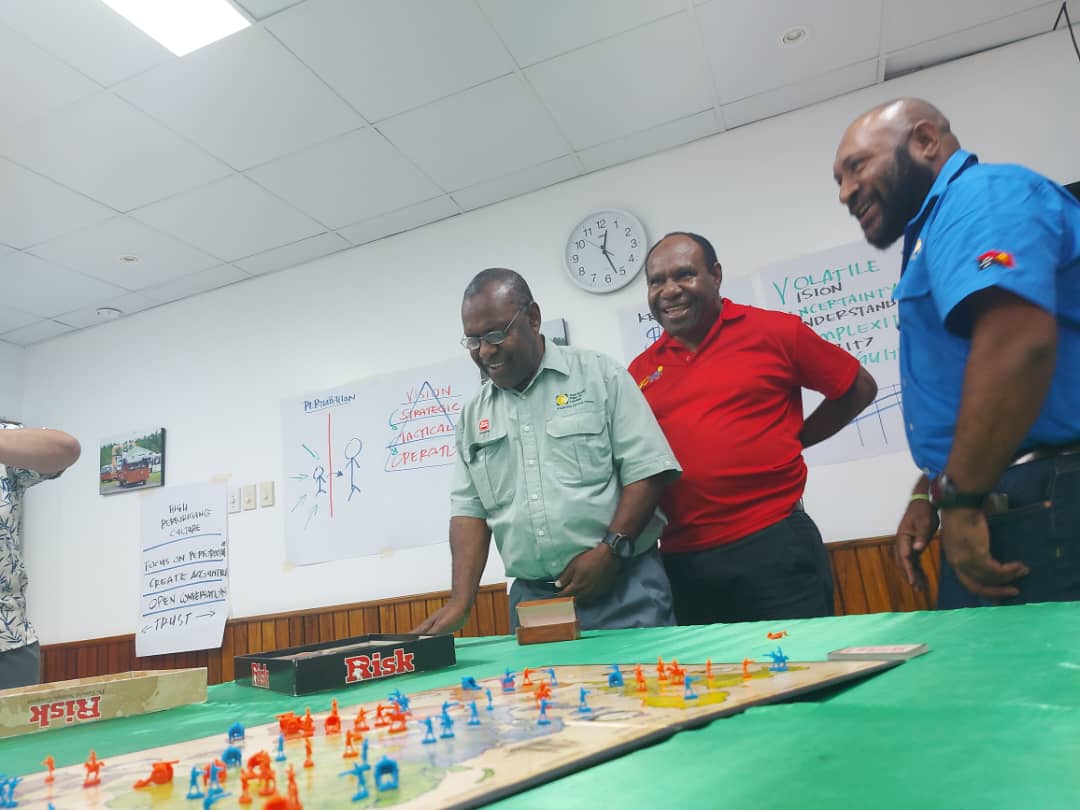
An activity should create a useful situation, not simply fill a slot. A limited-information task can make assumptions visible. A shared-resource simulation can reveal how teams request help and prioritise competing needs.
Explain the mechanism in the proposal: what information participants receive, what they must coordinate, what the facilitator observes and how the debrief links the task to work. Avoid claiming that winning a game proves workplace competence.
Protect the debrief
Reserve time to distinguish what happened from what it means. Ask: What did we actually observe? How did that affect the task? Where does a similar situation occur at work? What one practice should we test next?
For a large cohort, use short team reflection and a deliberate whole-group sharing method. Requiring every individual to speak can consume the programme. Requiring only the most senior person to report can hide useful perspectives.
Include people without forcing disclosure
Offer low-impact activity options and check accessibility. Mixed-seniority groups may work better with fictional scenarios, rotating task roles and a written reflection option. Participation should not depend on revealing a personal conflict in front of colleagues.
A whole-group game may need central coordination while table tasks can be supported by rotating facilitators. Set staffing from the mechanics of the activity, rather than headcount alone.
Leave with something small enough to use
Ask each team to select one working practice, name an owner and set a review date. A five-minute handover checklist may be more usable than a long statement about teamwork. The team’s manager should create an opportunity to try it.
Check the practice after an agreed interval. A participant story can show reported application, but should not be presented as proof that the programme caused a business result.
Published by iKON Insight Editorial. Examples are illustrative unless expressly identified as delivered work. This guide supports programme planning; confirm scope, availability and any country-specific requirements for the actual engagement.
How we approach our articles ↗Turn the question into a clear brief.
Bring the audience, dates and intended workplace change to a trainer-fit conversation.
Prepare your brief ↗